A New Era for Mumbai's Transit
Mumbai Metro Line 3, also known as the Aqua Line, is one of the most awaited infrastructure projects in Mumbai. The corridor runs from Aarey (JVLR) in the north to Cuffe Parade in South Mumbai, and it is approximately 33.5 km long. The line is Mumbai's first fully underground metro line.
Prime Minister Narendra Modi inaugurated the final stretch from Acharya Atre Chowk (Worli Naka) to Cuffe Parade on 8 October 2025, making the entire corridor operational for the public.
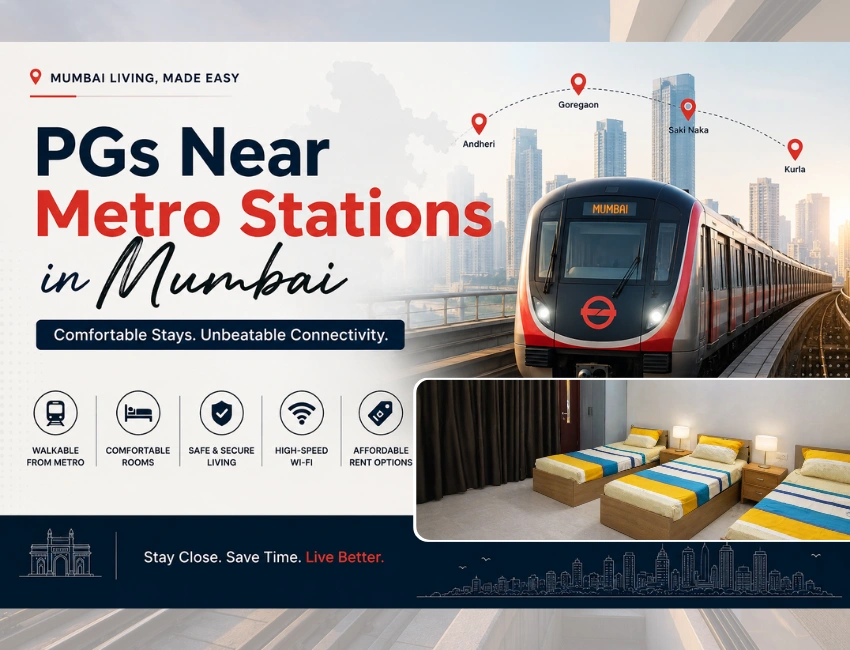
For students and working professionals who reside in Meridian Stays along with other locations in Andheri East, this metro line is a complete life-saver. The provision of direct linkages to business locations in Andheri, such as SEEPZ, Marol Naka, MIDC, and JB Nagar on a robust high-frequency rail system, will significantly change the daily commute for many in central and southern Mumbai, promoting faster, more efficient, and less stressful travel.
Key Features & Specs
Here are the main details about the fully operational line:
- Length: 33.5 km (fully underground, except 1 station at-grade)
- Number of Stations: 27 (26 underground + 1 at-grade)
- Travel Time: Entire stretch can be traversed in about 45 minutes
- Fare Range: ₹10 to ₹70 depending on the distance
- Train Frequency: ~Every 5 minutes during peak hours
- Daily Ridership Projection: ~13 lakh passengers
- Cost: Built at an estimated total cost of ~ ₹37,276 crore
- Funding & Support: Significant backing from Japan International Cooperation Agency (JICA) via ODA loans
Since the line is entirely underground, it avoids traffic congestion, suffers less from monsoon floods, and provides faster north-south connectivity across key zones in Mumbai.
What's New / Latest Updates
Here are some of the freshest developments:
1. Complete Inauguration & Opening
With the Acharya Atre Chowk - Cuffe Parade stretch now operational, the Aqua Line is now fully operational from station to station.
2. Network Blackout / No Mobile Connectivity
Almost immediately following the launch, commuters flagged a significant issue: once on the underground section, there is no mobile phone signal (no service for Jio, Airtel, etc.) and therefore passengers cannot use their digital payment apps or even make phone calls.
MMRCL has acknowledged and explained they are in discussions with telecom operators and will also be adding Wi-Fi in stations.
For now, commuters are being urged to carry cash / small change or utilize the NCMC (National Common Mobility Card).
3. Easy Airport Access through Foot Over Bridge (FOB)
A 100-metre FOB has opened to provide a direct link from the CSMIA Terminal-2 station on Metro Line 3 to the airport terminal. This minimizes the walking distance and eliminates the need to cross any roads in between.
4. Usage & Early Ridership
In the first few days, there were over 1.5 lakh users (Jogeshwari → Cuffe Parade) using this new stretch daily.
5. Phase-wise Progress Towards Full Launch
Phase 1 (Aarey → BKC): opened October 2024, Phase 2A (BKC → Acharya Atre Chowk): opened May 2025, Final leg (Acharya Atre Chowk → Cuffe Parade): opened October 2025
6. Support and Partnerships
The project has been funded under the JICA funding (Official Development Assistance) loans. Also, we were also able to set up to use the NCMC (Unified Payment) card earlier by letting you use “tap-and-travel” for just the operational stretches of the metro and also for payment commute with other lines and bus services.
Challenges & Issues
While the launch is an unprecedented accomplishment, there are growing pains associated with the initiation:
- There is currently no mobile connectivity underground, hindering app-based ticketing and payments (e.g. UPI) and generally limiting communication.
- Some ticket counters apparently do not have change for larger bills, which is problematic during cash transactions.
- Wi-Fi is supposed to be available at key stations, yet many users are unable to access or connect to the tier Wi-Fi, particularly iPhones.
- Connecting with legacy transport modes (last mile, buses, suburban rail) needs optimization.
- Those who still prefer cash transactions will also find these initial days cumbersome with the level of reliance on digital / card modes.
The municipalities are aware of many of these issues. Hopefully, they are working on at least some fixes, particularly with the network availability in tunnels, and expanded station Wi-Fi.
Impact: Why It Matters for Mumbai
- Shorter travel times and less congestion: The Aqua Line provides a faster north-south direction, allowing users to bypass a lot of Mumbai's notoriously congested traffic.
- Interconnectivity: The Aqua Line connects with suburban rail, other metro lines, and the airport, facilitating integrated travel.
- Positive environmental outcomes: The metro will reduce vehicle trips and petrol usage, helping to reduce CO₂ emissions.
- Real estate and development uplift: Property values will increase along the corridor and in adjacent areas (lower/mid Mumbai, BKC, Worli).
- Increased urban mobility equity: A fully underground metro allows all citizens, at every income or social level, to move faster, and more reliably, especially during monsoon months.
Tips for Commuters (Especially Early Days)
- Make sure you have small change available in case any digital payments do not work.
- When you are using mobile apps for tickets or transit, download your tickets / complete your transactions before traveling through underground areas.
- Evidence also shows that a NCMC card can work across platform and reduce dependency on the network to make payments for travel.
- Plan for some buffer time to adjust in the early weeks as initial adjustments begin to stabilize.
- Keep track of announcements made by MMRCL and telecom operators about restored signals.
What to Watch Next
- When will full network (mobile) connectivity to all tunnels and stations be achieved?
- How soon can Wi-Fi be made resistant and device-friendly across the entire network?
- How effective will integration with buses, suburban trains, and other metro lines be?
- Growth of ridership over the coming months - if targets (~13 lakh/day) are met.
- What further infrastructure improvements will occur: improved last-mile connectivity, pedestrian subways, improved escalators/elevators etc.
- How the line's success will inform planning and funding for future metro lines (e.g. Line 6 / Pink, Line 7 etc.).
How Metro Line 3 Benefits PG In Andheri Residents
If you're staying at our Chakala, Marol, JB Nagar, Sakinaka, or MIDC properties, you now have quick underground metro access to:
- BKC - reach offices in 20 minutes
- Worli & Dadar - cut travel time by half
- Cuffe Parade & Colaba - reach South Mumbai comfortably
- Airport T2 - just a short ride away
No more fighting with endless road traffic or waiting for overcrowded trains - Metro Line 3 connects PG In Andheri directly to these key areas of Mumbai.
Conclusion
The complete launch of Mumbai Metro Line 3 is a landmark stage in the development of urban transit in Mumbai. This is the city's first fully underground metro corridor, and it is a precursor to a change in how people travel across north–south Mumbai. There have been some initial operational problems, such as not having mobile network coverage and problems with payment/change, which have been inconvenient; however, they are just normal teething issues. Overall, these situations are being worked on by those in charge of the project.
Once it is fully functioning, the Aqua Line has the power to transform how long it will take to get around and relieve congestion on roads and current rail services; it will shape how people commute in Mumbai for many years.
For those looking to enjoy city life without the chaos of long commutes, Meridian Stays is perfectly located along the metro corridor, offering affordable, safe, and premium accommodations near every major hub.
Explore our locations today - meridianstays.in and live closer to the future of Mumbai’s metro-connected lifestyle.